Uranus, Neptune, and Pluto move so slowly through the zodiac that their influence reaches far beyond an individual horoscope. Astrology calls them generational planets because they describe shared experiences, cultural shifts, and long chapters of social development. Understanding their role helps you see how personal life connects with the era into which you were born.
Why some planets speak for a generation
The Sun, Moon, Mercury, Venus, and Mars move through the zodiac relatively quickly. Their positions therefore help distinguish your temperament, emotional responses, communication style, relationships, and motivation. The outer planets work on a broader timescale.
Jupiter and Saturn already describe social development, institutions, growth, and responsibility. Uranus, Neptune, and Pluto extend the perspective across decades and reveal deeper changes in technology, ideals, power, and collective awareness. Their movements form a background pattern shared by large groups of people.
A generational planet usually remains in one zodiac sign for several years. Millions of people may consequently have Uranus, Neptune, or Pluto in the same sign. The sign explains the collective theme, while the astrological house and aspects show how that theme becomes personal.
Three slow cycles, three layers of change
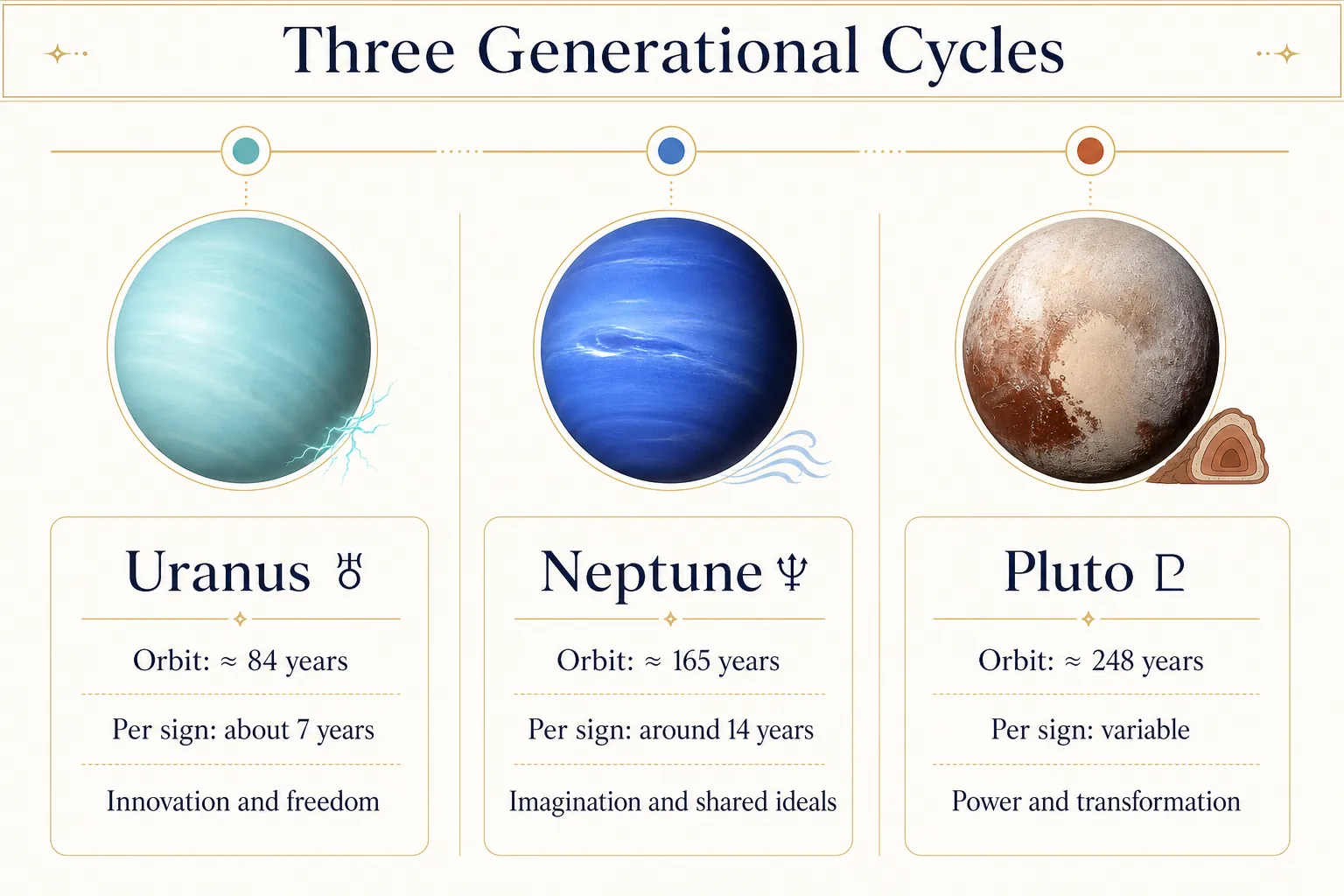
Uranus completes one orbit around the Sun in approximately 84 years and spends about seven years in each sign. Neptune requires roughly 165 years for an orbit and remains in a sign for around 14 years. Pluto follows a highly elliptical orbit lasting about 248 years, so its stay in a sign varies considerably.
These different speeds create overlapping generational groups. People close in age often share all three outer-planet signs, while people born farther apart may share only Neptune or Pluto. Each combination carries a distinctive cultural tone.
Uranus awakens and disrupts, Neptune dissolves and inspires, and Pluto exposes and transforms. Together, they describe how an era breaks with the past, imagines a new reality, and confronts the forces that must be rebuilt.
Uranus: innovation, freedom, and sudden awakening
Uranus represents breakthrough, independence, invention, rebellion, and rapid change. Its sign placement reveals the area in which a generation challenges convention and searches for greater freedom. It often accompanies technological advances and new forms of social organization.
A Uranian generation instinctively notices systems that have become rigid or outdated. Its members may experiment with fresh lifestyles, communication methods, political ideas, or scientific tools. What initially appears unconventional can later become part of everyday life.
Uranus also describes disruption that arrives quickly and changes expectations. Its energy favors originality, but it can produce restlessness when change becomes an end in itself. A mature expression combines innovation with a clear understanding of its practical consequences.
When Uranus strongly aspects your Sun, Moon, Ascendant, or personal planets, collective change becomes part of your individual story. You may feel called to introduce new ideas, question inherited rules, or help others adapt to unfamiliar conditions. Your role can be that of an innovator, reformer, connector, or catalyst.
Neptune: imagination, ideals, and shared dreams
Neptune represents imagination, spirituality, compassion, art, symbolism, and the desire to transcend ordinary limits. Its zodiac sign describes the dreams and ideals that influence a generation. It also shows which collective images can inspire unity, longing, or fascination.
Neptunian themes often spread through music, film, photography, fashion, spiritual movements, and shared visions of a better world. A generation shaped by Neptune can be highly receptive to subtle moods and cultural narratives. Its creative sensitivity allows it to express feelings that society has sensed before finding the right words.
Neptune softens boundaries and encourages empathy. At the same time, strong idealism can blur priorities or create unrealistic expectations. Its most constructive expression turns inspiration into art, compassion, healing, and meaningful service.
Personal aspects to Neptune make the generational dream more intimate. A connection with Mercury may emphasize imaginative thinking, while a connection with Venus can deepen artistic and romantic sensitivity. Contact with the Sun or Ascendant may lead you to embody the hopes, aesthetics, or spiritual questions of your age group.
Pluto: power, crisis, and profound renewal
Pluto represents transformation, power, survival, hidden processes, and regeneration. Because it moves very slowly, its sign placement defines broad historical generations. It reveals where society faces intense pressure and where fundamental reconstruction becomes necessary.
Pluto brings buried material to the surface. Its generational themes may involve institutions, economic structures, resources, sexuality, psychology, authority, or the distribution of power. The process can be demanding, yet it creates the possibility of lasting change.
A Pluto generation often develops resilience through encounters with collective crisis. Its members learn to recognize manipulation, confront taboo subjects, and examine what operates behind visible events. Their influence becomes strongest when they use insight responsibly rather than repeating old struggles for control.
When Pluto forms close aspects to personal planets or angles, its collective mission gains personal intensity. You may become deeply involved in reform, research, psychology, healing, leadership, or crisis management. Your individual choices can then express a much larger movement toward renewal.
How the three planets work together
The outer planets rarely tell separate stories. Uranus opens the door to a new possibility, Neptune gives that possibility an image or ideal, and Pluto tests whether it can survive profound change. Their combined sign positions create the signature of a historical period.
One generation may pursue technological freedom while imagining a more connected society and transforming established power structures. Another may rebel through art, seek spiritual meaning, and rebuild attitudes toward intimacy or shared resources. The exact expression depends on the signs, aspects, and historical environment involved.
People born within the same period can respond to this signature in very different ways. Some become visible leaders of generational change, while others express it through family decisions, professional choices, creative work, or community involvement. The shared pattern provides a theme rather than a single role.

How to read generational planets in a birth chart
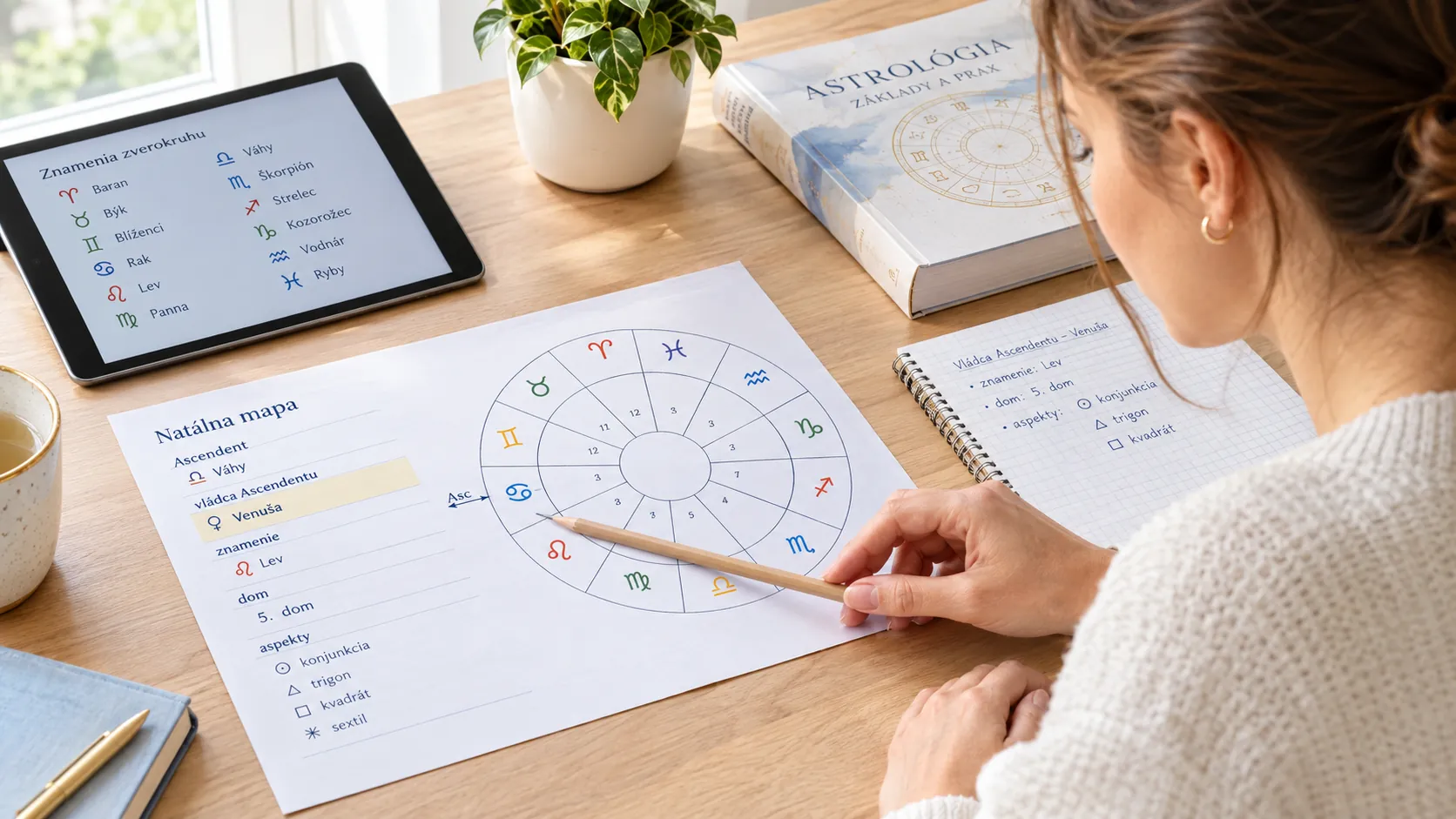
Begin with the signs occupied by Uranus, Neptune, and Pluto. Identify the qualities associated with those signs and connect them with each planet’s central function. This first step reveals the collective language of your generation.
Next, examine the houses containing the three planets. The houses show where broad cultural forces enter your lived experience, such as relationships, career, education, home, creativity, or shared finances. A generational placement becomes especially noticeable when it stands near an important house cusp.
Then study aspects to the Sun, Moon, Mercury, Venus, Mars, the Ascendant, and the Midheaven. Close aspects indicate that you carry the collective pattern in a direct and recognizable way. The type of aspect explains whether the energy flows easily, creates tension, or demands conscious integration.
You can also compare your placements with those of parents, colleagues, partners, and younger people. Shared outer planets highlight common assumptions, while different placements reveal contrasting attitudes toward freedom, ideals, and power. This comparison can clarify why age groups interpret the same event through different lenses.
From collective influence to personal contribution
Generational astrology becomes most useful when you connect large themes with specific actions. Uranus asks where you can improve a system, Neptune asks what vision gives that improvement meaning, and Pluto asks what must change at the root. These questions turn abstract symbolism into practical reflection.
Look at the fields that repeatedly attract your attention. Interest in emerging technology may resonate with Uranus, dedication to art or compassionate care may express Neptune, and a drive to reform powerful institutions may carry Pluto’s signature. Your chart shows where these motivations can become personally significant.
Transits of the outer planets activate this potential over long periods. Their influence may unfold through several stages, beginning with unease, inspiration, or pressure and continuing through experimentation and adjustment. Patience helps you recognize the larger direction behind individual events.
Working consciously with these planets requires both vision and grounding. Innovation benefits from responsibility, idealism gains strength through clear boundaries, and transformation becomes constructive when power is handled ethically. This balance allows you to participate in collective change while preserving your individual values.
The long story behind an individual horoscope
Uranus, Neptune, and Pluto place every birth chart within a wider historical story. They reveal the innovations, dreams, and transformations that your generation is prepared to explore. Their houses and aspects explain how you can give those shared themes a personal form.
By reading these planets together, you gain a clearer view of both your era and your possible contribution to it. You become part of the bridge between inherited structures and the world that is still taking shape.